
Is this your project? Give it 30 days of featured visibility.
Promote your projectDeepEval
Open-source LLM evaluation framework for testing AI agents, RAG systems, chatbots, and model-powered applications.
Directory description / not source-linked

Additional AI-assisted overview
DeepEval is presented as an open-source LLM evaluation framework, specifically designed to address the critical need for robust testing and validation in the rapidly evolving landscape of artificial intelligence.
It serves as a foundational tool for developers and teams engaged in building and deploying sophisticated AI applications, providing comprehensive mechanisms to ensure the reliability and performance of their creations. This framework is essential for maintaining high standards of quality across various AI deployments, from initial development stages through to ongoing operational monitoring. The framework's capabilities extend to a broad spectrum of AI technologies. DeepEval facilitates the rigorous evaluation of AI agents, ensuring their autonomous functions perform predictably and interact effectively within their target environments. It also offers dedicated features for scrutinizing Retrieval-Augmented Generation (RAG) systems, which is crucial for verifying the accuracy, relevance, and factuality of generated content based on retrieved data sources. Furthermore, DeepEval is instrumental in the development and continuous improvement of chatbots, enabling thorough assessment of conversational flows, response quality, and overall user experience. Its utility encompasses any application powered by large language models, providing the necessary infrastructure to monitor performance, identify potential regressions, and sustain high levels of quality throughout the application lifecycle. DeepEval is useful beyond initial testing. It underscores its role in the continuous oversight of AI system health and effectiveness. By offering a structured approach to evaluation, DeepEval empowers organizations to proactively manage the performance of their AI assets, making it an indispensable component for resilient AI development and confident deployment strategies in today's demanding technological landscape. Its open-source nature further promotes transparency and collaborative improvement within the AI community.
Unverified fallback. This legacy AI-assisted copy is not used as evidence for the structured facts or decision guidance on this page.
Capabilities
Source-backed claims are preferred. AI-assisted fallback items are labelled individually.
Open-source LLM evaluation framework
AI-assisted fallback / unverified
Capabilities for testing AI agents
AI-assisted fallback / unverified
Evaluation features for RAG systems
AI-assisted fallback / unverified
Testing and validation for chatbots
AI-assisted fallback / unverified
Support for model-powered application evaluation
AI-assisted fallback / unverified
Framework for LLM performance monitoring
AI-assisted fallback / unverified
Mechanisms for identifying AI system regressions
AI-assisted fallback / unverified
Tools for assessing AI application reliability
AI-assisted fallback / unverified
Use cases
Source-backed claims are preferred. AI-assisted fallback items are labelled individually.
Evaluating the performance and reliability of AI agents before and after deployment
AI-assisted fallback / unverified
Benchmarking the accuracy and relevance of Retrieval-Augmented Generation (RAG) systems
AI-assisted fallback / unverified
Testing chatbot responses, conversational flows, and overall user experience
AI-assisted fallback / unverified
Ensuring the quality and stability of applications powered by large language models
AI-assisted fallback / unverified
Continuously monitoring the health and effectiveness of AI systems in production environments
AI-assisted fallback / unverified
How ClawSites assesses DeepEval
No source-backed best-for or limitation claim is published yet. Unsupported conclusions are omitted until a checked source supports them.
Method: ClawSites keeps discovery copy separate from publishable claims, retains a source excerpt, and displays the date each cited source was checked. Pricing and availability can still change after that date.
Related to DeepEval
Similar directory context, not an editorial claim that these products are interchangeable.

Evaluation framework for RAG systems and AI agents with metrics, test datasets, and evaluation-driven development workflows.
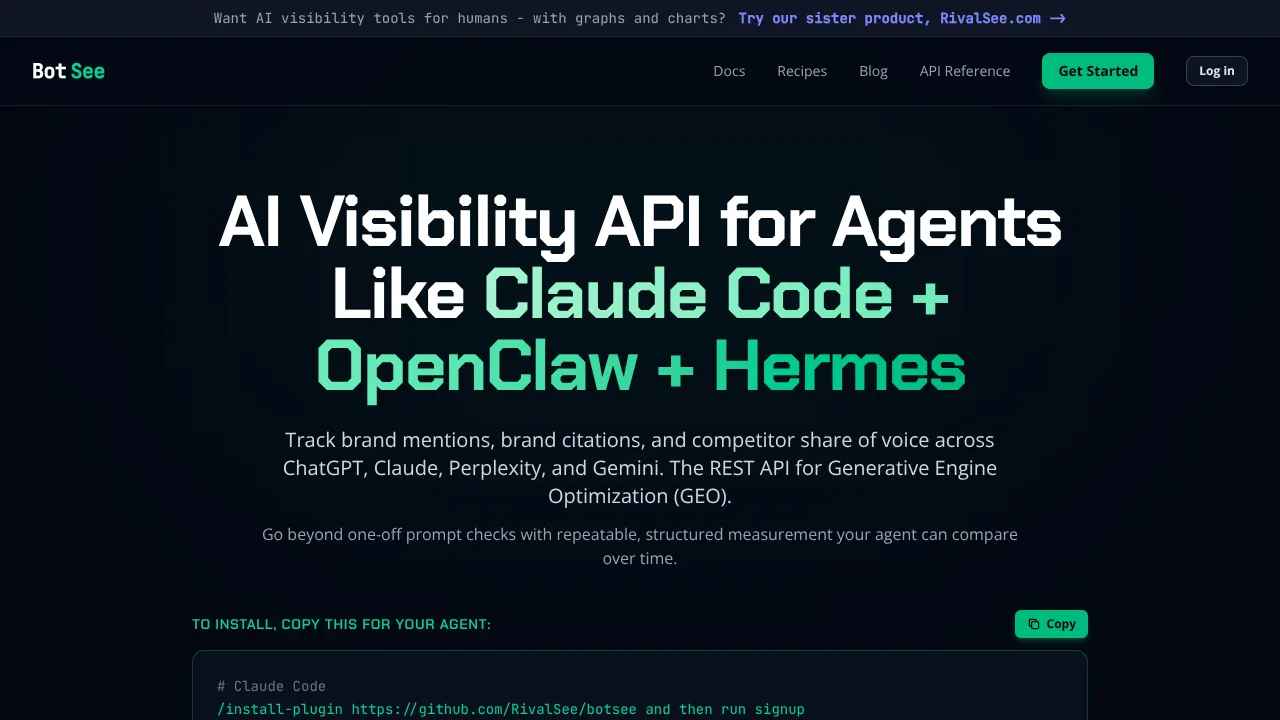
Agent-native API and CLI for repeatable AI-market benchmarks, structured evidence, and human-reviewed GTM decisions.
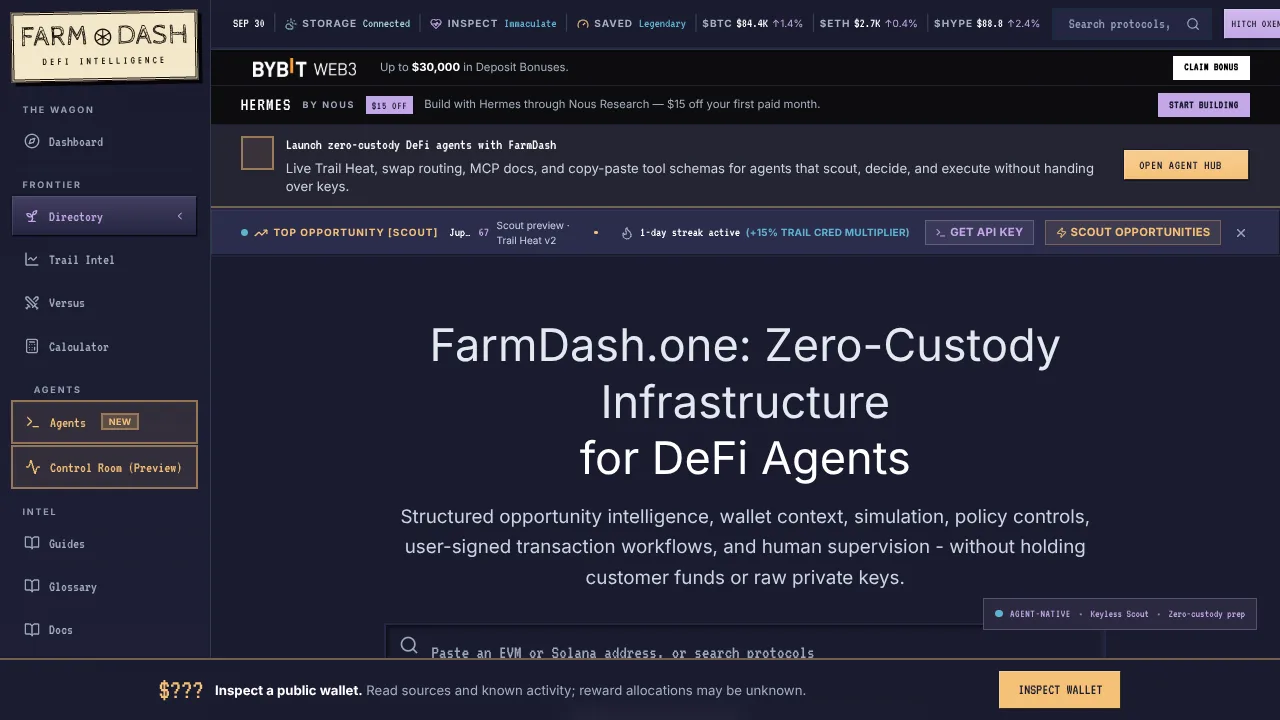
DeFi intelligence and data APIs for AI agents, including protocol research and Trail Heat analytics through REST/OpenAPI. A local stdio MCP server is also available; it is not a hosted remote MCP endpoint. Wallet-affecting actions remain user-signed; FarmDash does not custody funds.

Upsolve AI is an agent studio for data teams to encode business context in analytics agents and expose them to the wider business.
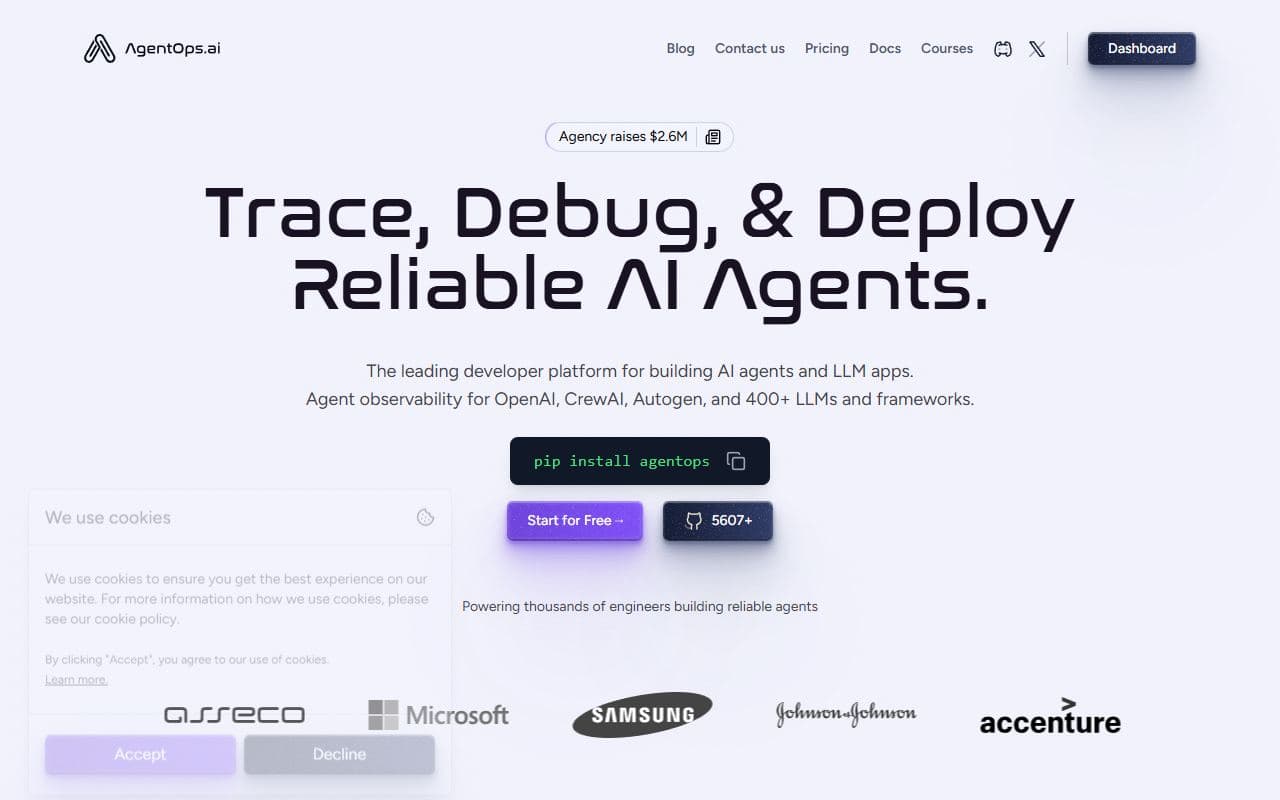
Developer platform for tracing, testing, debugging, and deploying AI agents and LLM applications.
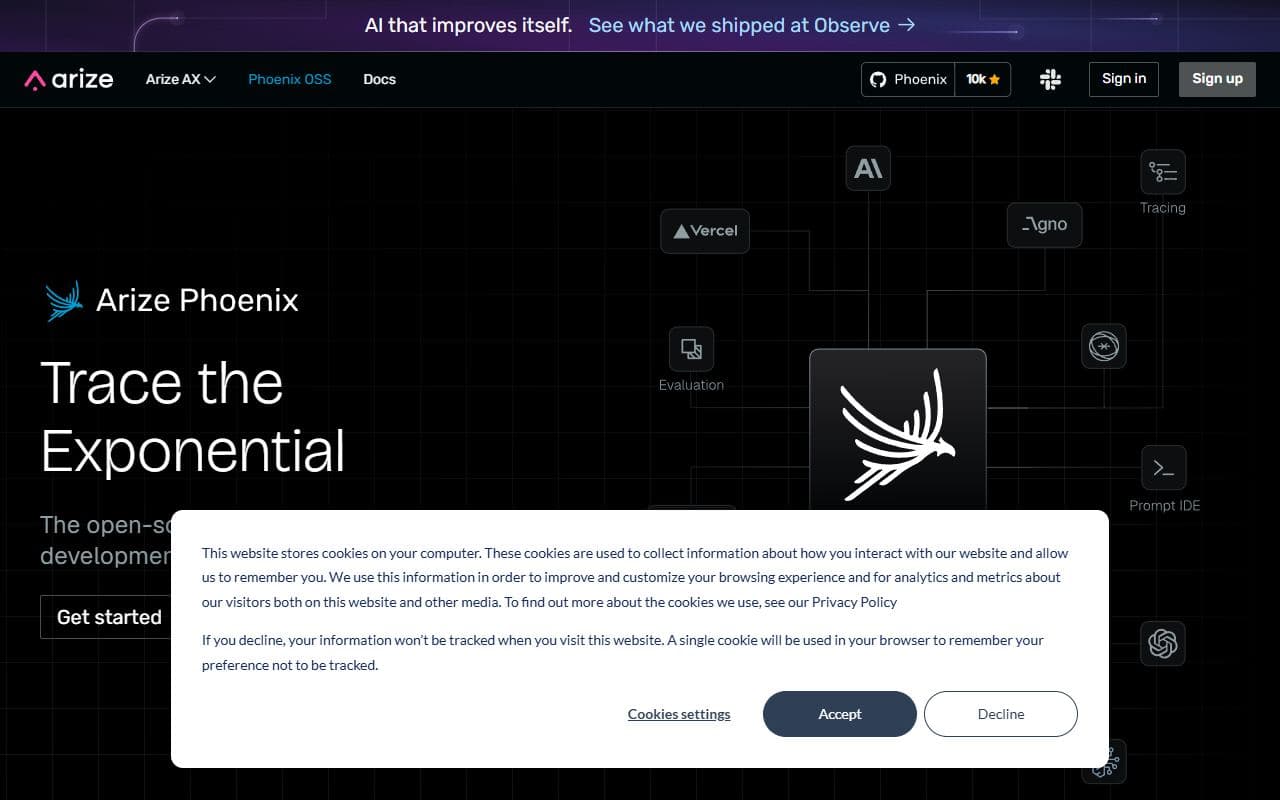
Arize Phoenix is an open-source observability and evaluation platform built on OpenTelemetry for tracing and debugging LLM applications.