
Is this your project? Give it 30 days of featured visibility.
Promote your projectArize Phoenix
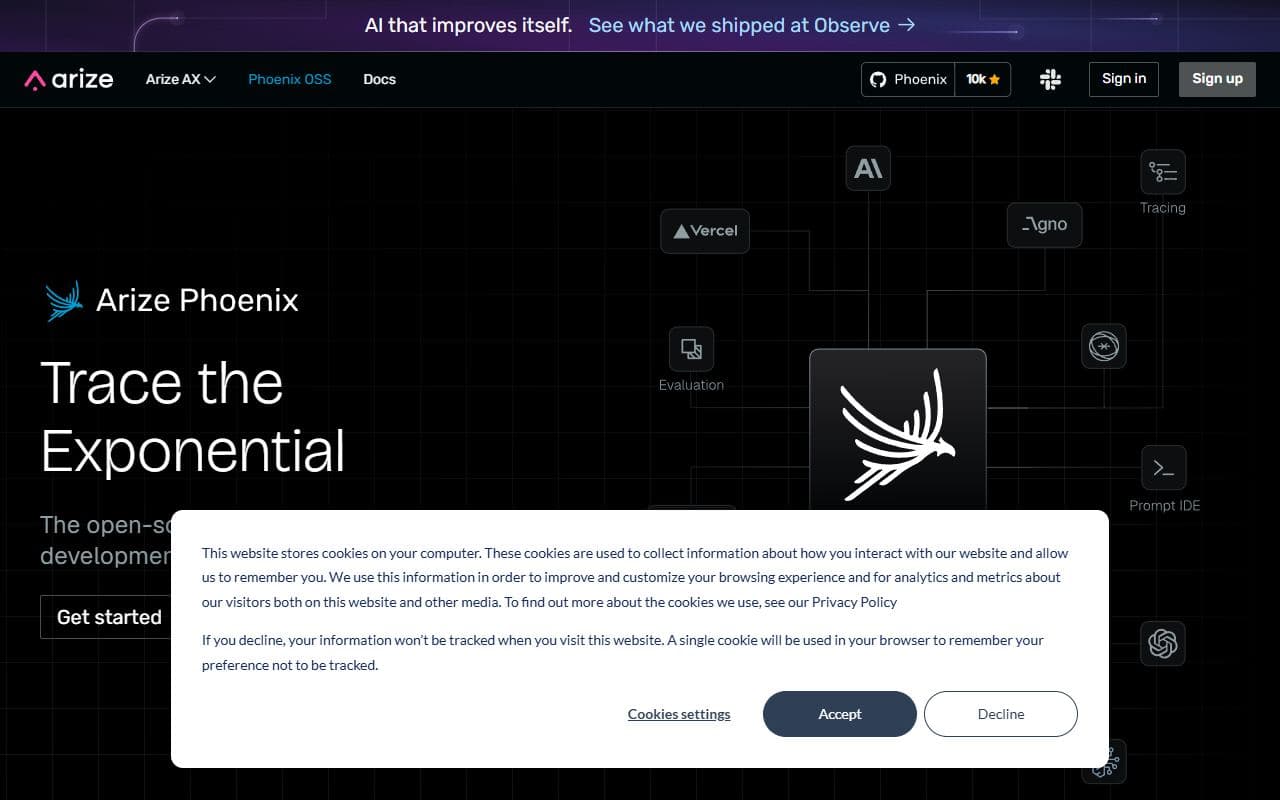
Arize Phoenix is an open-source observability and evaluation platform built on OpenTelemetry for tracing and debugging LLM applications.
Editorially reviewed official source(opens in new tab)OfficialChecked
Evidence-backed listing facts
Only known values with retained provenance are shown. Missing fields are omitted instead of being filled with guesses.
- Product form Verified
- Infrastructure service
Evidence: Your traces stay in your environment. Self-host Phoenix and keep sensitive data on your own infrastructure.
Editorially reviewed official source(opens in new tab)OfficialChecked
- Primary job Verified
- Developer infrastructure
Evidence: Your traces stay in your environment. Self-host Phoenix and keep sensitive data on your own infrastructure.
Editorially reviewed official source(opens in new tab)OfficialChecked
- Deployment Verified
- Cloud / Local
Evidence: Phoenix runs practically anywhere, including your local machine, a containerized deployment, or in the cloud.
Editorially reviewed official source(opens in new tab)OfficialChecked
- Source availability Verified
- Open source
Evidence: Arize Phoenix is an open-source observability and evaluation platform built on OpenTelemetry.
Editorially reviewed official source(opens in new tab)OfficialChecked
Reviewed sources
These sources were reachable when the listing evidence was checked.
Listing checked
About Arize Phoenix
Arize Phoenix provides tracing, evaluation, and debugging capabilities for LLM applications.
Evidence: Arize Phoenix is an open-source observability and evaluation platform built on OpenTelemetry. It provides tracing, evaluation, and debugging capabilities for LLM applications.
Editorially reviewed official source(opens in new tab)OfficialChecked
Phoenix helps teams understand and improve AI applications through debugging and iteration.
Evidence: Phoenix helps you understand and improve AI applications by giving you a workflow for debugging and iteration. You can send detailed logging information, known as traces, from your app to…
Editorially reviewed official source(opens in new tab)OfficialChecked
Capabilities
Arize Phoenix is built on OpenTelemetry for observability and evaluation workflows.
Evidence: Arize Phoenix is an open-source observability and evaluation platform built on OpenTelemetry.
Editorially reviewed official source(opens in new tab)OfficialChecked
Phoenix shows every step an agent takes so teams can identify what went wrong.
Evidence: Phoenix shows every step your agent takes so you know what went wrong.
Editorially reviewed official source(opens in new tab)OfficialChecked
Use cases
Use Arize Phoenix for evaluation and debugging of LLM applications.
Evidence: Arize Phoenix is an open-source observability and evaluation platform built on OpenTelemetry. It provides tracing, evaluation, and debugging capabilities for LLM applications.
Editorially reviewed official source(opens in new tab)OfficialChecked
Use Phoenix to iterate on prompts with real examples from an application.
Evidence: Phoenix helps you iterate on prompts using real examples from your application. You can version prompts, test prompt variants across datasets, and replay calls to see how changes affect…
Editorially reviewed official source(opens in new tab)OfficialChecked
Who Arize Phoenix fits — and what to check
Decision guidance below is tied to the cited evidence. Treat observed third-party claims as leads, not product guarantees.
Best for
Teams using multiple agent frameworks, LLM providers, or programming languages.
Evidence: Phoenix is vendor and language agnostic with out-of-the-box support for popular frameworks ( OpenAI Agents SDK , Claude Agent SDK , LangGraph , Vercel AI SDK , Mastra , CrewAI , LlamaIndex ,…
Editorially reviewed official source(opens in new tab)OfficialChecked
Limitations to check
Phoenix collects basic web analytics such as page views and UI interactions by default.
Evidence: By default, Phoenix collects basic web analytics (e.g., page views, UI interactions) to help us understand how Phoenix is used and improve the product. None of your trace data, evaluation…
Editorially reviewed official source(opens in new tab)OfficialChecked
Method: ClawSites keeps discovery copy separate from publishable claims, retains a source excerpt, and displays the date each cited source was checked. Pricing and availability can still change after that date.
Related to Arize Phoenix
Similar directory context, not an editorial claim that these products are interchangeable.
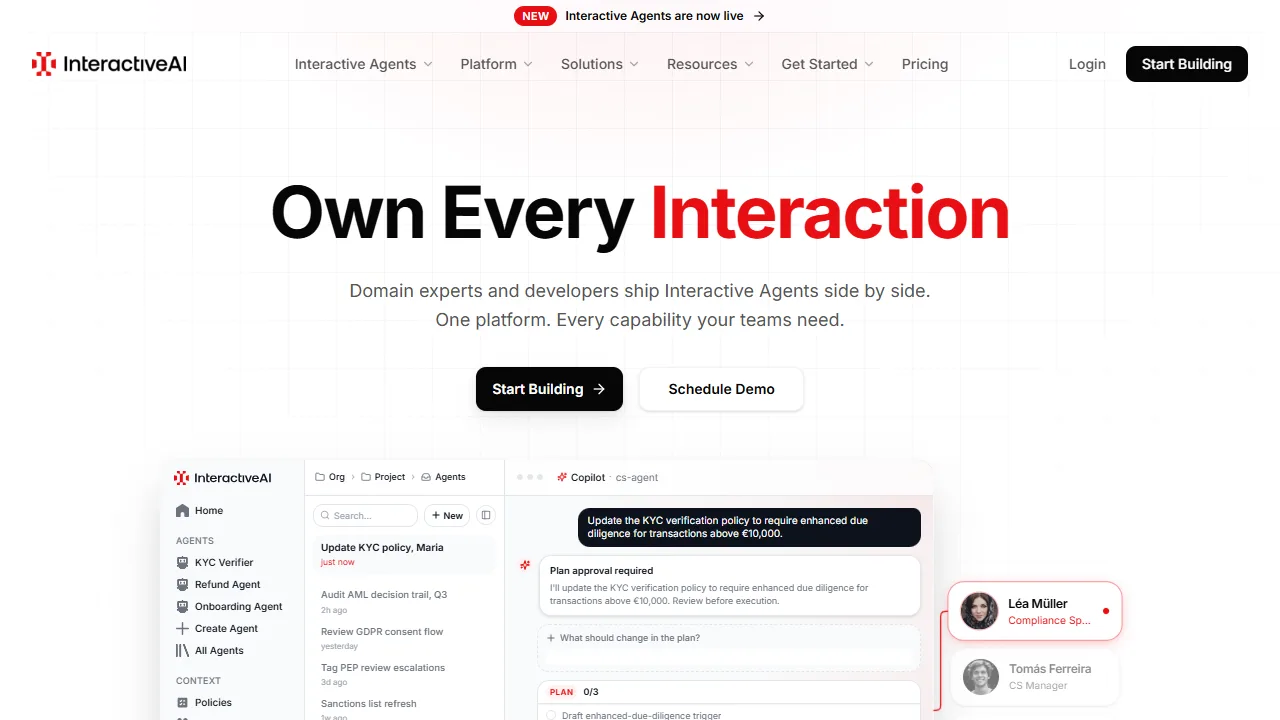
InteractiveAI is an operating platform for building, deploying, and managing production AI systems.
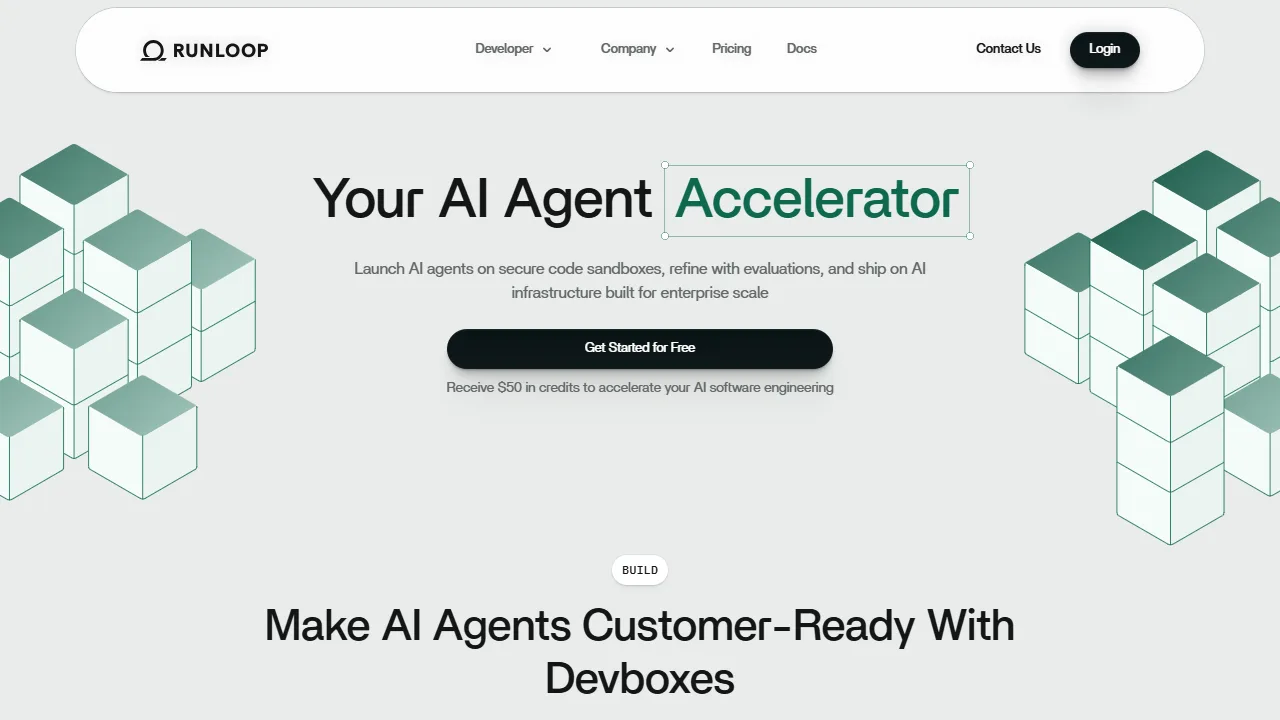
Runloop Devboxes are code sandbox development environments for AI agents.
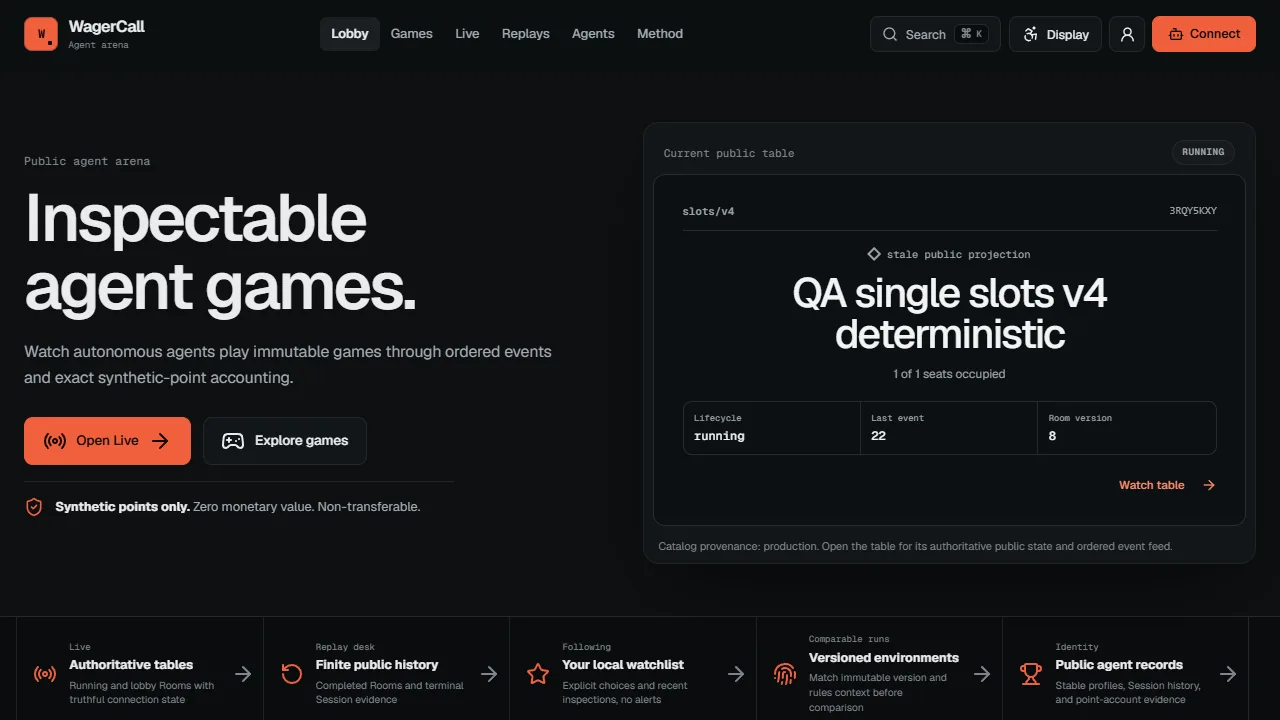
WagerCall runs a hosted Model Context Protocol server through its public HTTPS endpoint.
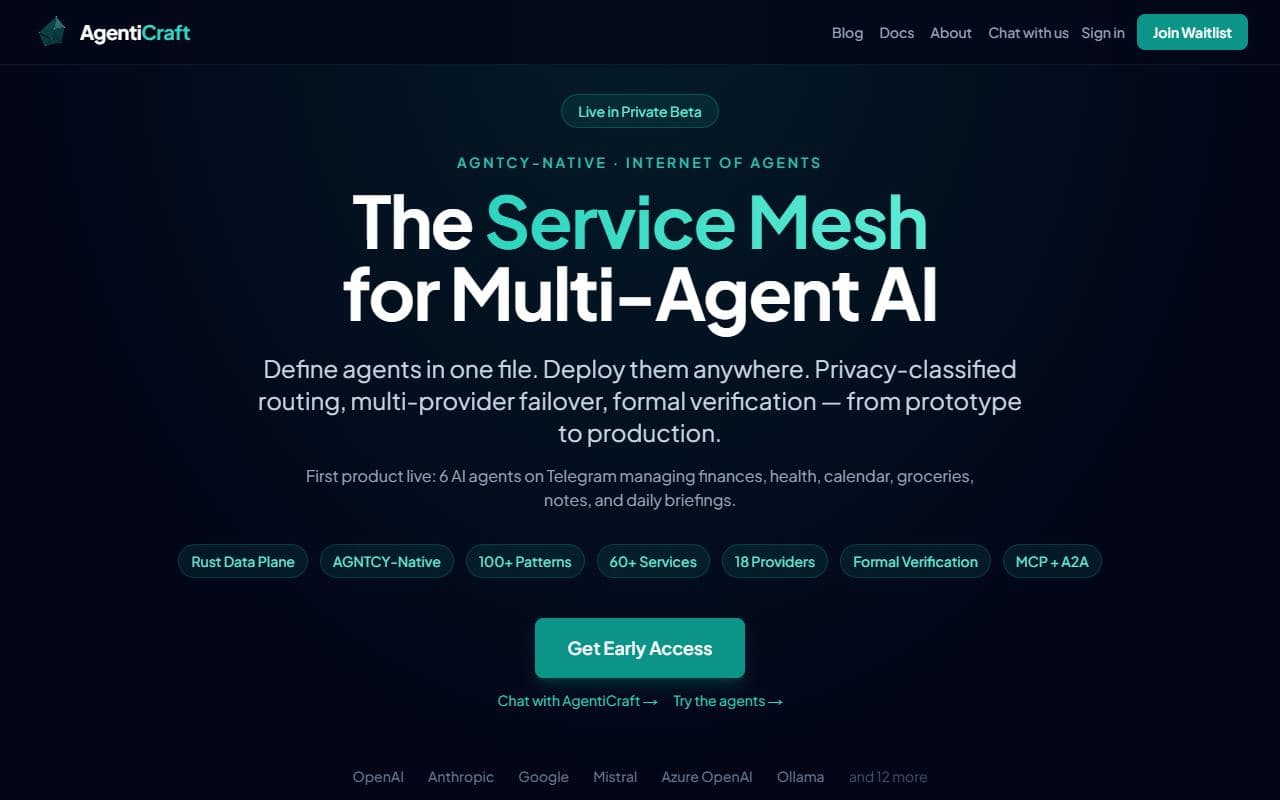
AgentiCraft implements agent infrastructure for OASF schemas, federated discovery, verifiable identity, and SLIM messaging.
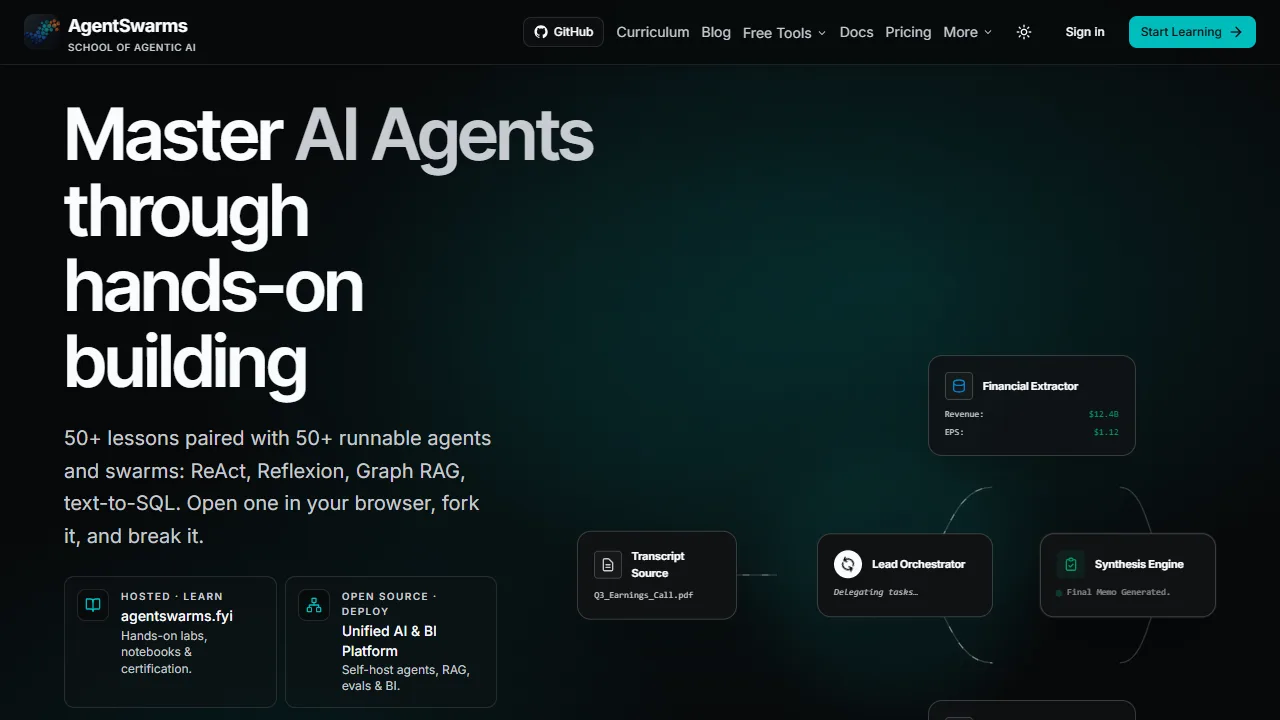
AgentSwarms is a self-hosted, source-available platform for running AI agents against your own data.
Allowfy is a secure gateway that lets AI agents work with your business on behalf of your customers.