
Is this your project? Give it 30 days of featured visibility.
Promote your projectSponge
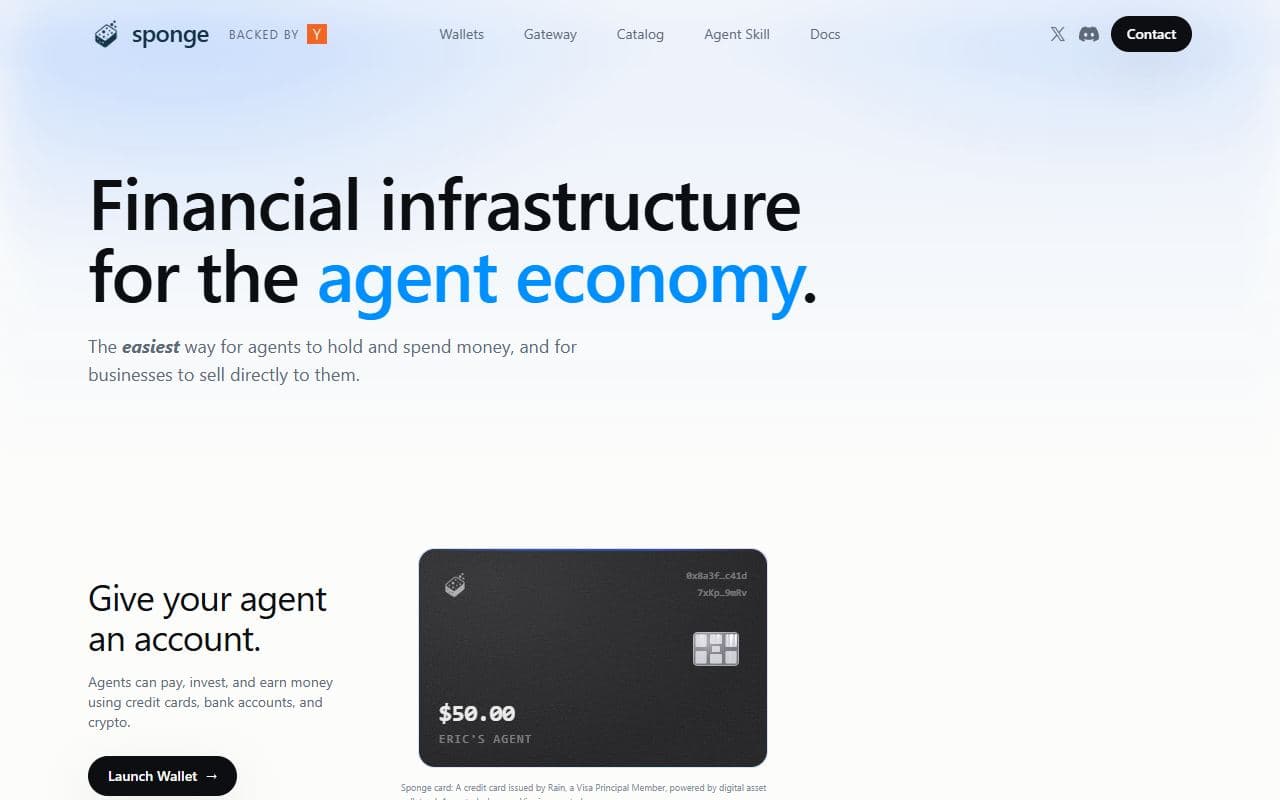
Wallets, agent spending controls, and payment gateways for the agent economy.
Directory description / not source-linked
Additional AI-assisted overview
Sponge is a specialized integration solution engineered to support and empower the evolving AI agent economy by establishing essential financial infrastructure.
Designed for developers and organizations building autonomous AI entities, Sponge addresses the critical need for secure, controlled, and programmatic financial operations within agent-based systems. It offers a comprehensive suite of services that enable AI agents to engage in monetary transactions, manage funds effectively, and adhere to predefined budgetary constraints, positioning itself as a foundational component for robust, financially intelligent AI deployments. The platform's core functionalities include the provision of robust digital wallets specifically tailored for AI agents, facilitating the secure storage and management of funds or digital assets on an agent's behalf. Complementing these wallets, Sponge incorporates sophisticated agent spending controls, which are vital for implementing predefined limits and rules on an agent's financial activities. These controls help prevent unauthorized expenditures and ensure that agents operate strictly within specified economic parameters. Furthermore, Sponge provides reliable payment gateways, enabling AI agents to seamlessly initiate and receive payments, thereby integrating them into broader financial ecosystems and facilitating real-world economic interactions. By unifying critical components such as wallets, spending controls, and payment gateways, Sponge acts as a crucial middleware layer, abstracting the complexities of financial transactions for AI agents. Its focus on integration means it provides the necessary tools for developers to easily embed comprehensive financial capabilities into their agents, fostering a more dynamic and economically active AI landscape. This infrastructure is particularly valuable for applications where agents need to independently manage resources, pay for services, or participate in economic exchanges, all while maintaining operational security and compliance within the agent economy.
Unverified fallback. This legacy AI-assisted copy is not used as evidence for the structured facts or decision guidance on this page.
Capabilities
Source-backed claims are preferred. AI-assisted fallback items are labelled individually.
AI Agent Wallet provision
AI-assisted fallback / unverified
Configurable Agent Spending Controls
AI-assisted fallback / unverified
Agent-specific Payment Gateway services
AI-assisted fallback / unverified
Financial Transaction Integration capabilities
AI-assisted fallback / unverified
Secure Transaction Facilitation for AI
AI-assisted fallback / unverified
Programmatic access for agent financial operations
AI-assisted fallback / unverified
Management of agent financial flows
AI-assisted fallback / unverified
Use cases
Source-backed claims are preferred. AI-assisted fallback items are labelled individually.
Enabling AI agents to autonomously pay for computational resources or third-party API access.
AI-assisted fallback / unverified
Implementing granular spending limits and financial governance for independent AI operations.
AI-assisted fallback / unverified
Facilitating secure reception of payments by AI agents for services provided within a digital economy.
AI-assisted fallback / unverified
Integrating financial transaction capabilities into AI-driven marketplaces or automated service platforms.
AI-assisted fallback / unverified
How ClawSites assesses Sponge
No source-backed best-for or limitation claim is published yet. Unsupported conclusions are omitted until a checked source supports them.
Method: ClawSites keeps discovery copy separate from publishable claims, retains a source excerpt, and displays the date each cited source was checked. Pricing and availability can still change after that date.
Related to Sponge
Similar directory context, not an editorial claim that these products are interchangeable.
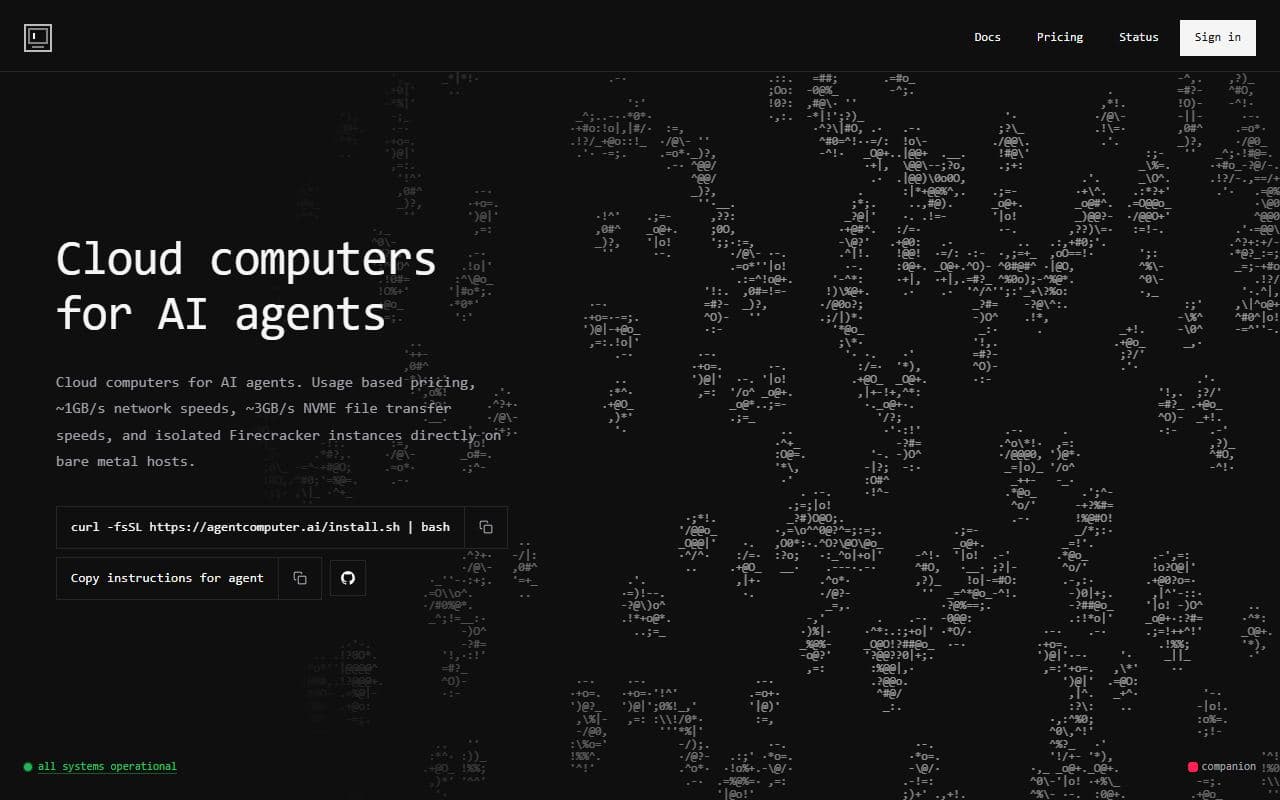
Persistent cloud computers for agent code execution, remote workflows, and long-running automation.

Virtual card platform that gives AI agents scoped payment credentials for controlled online purchases.
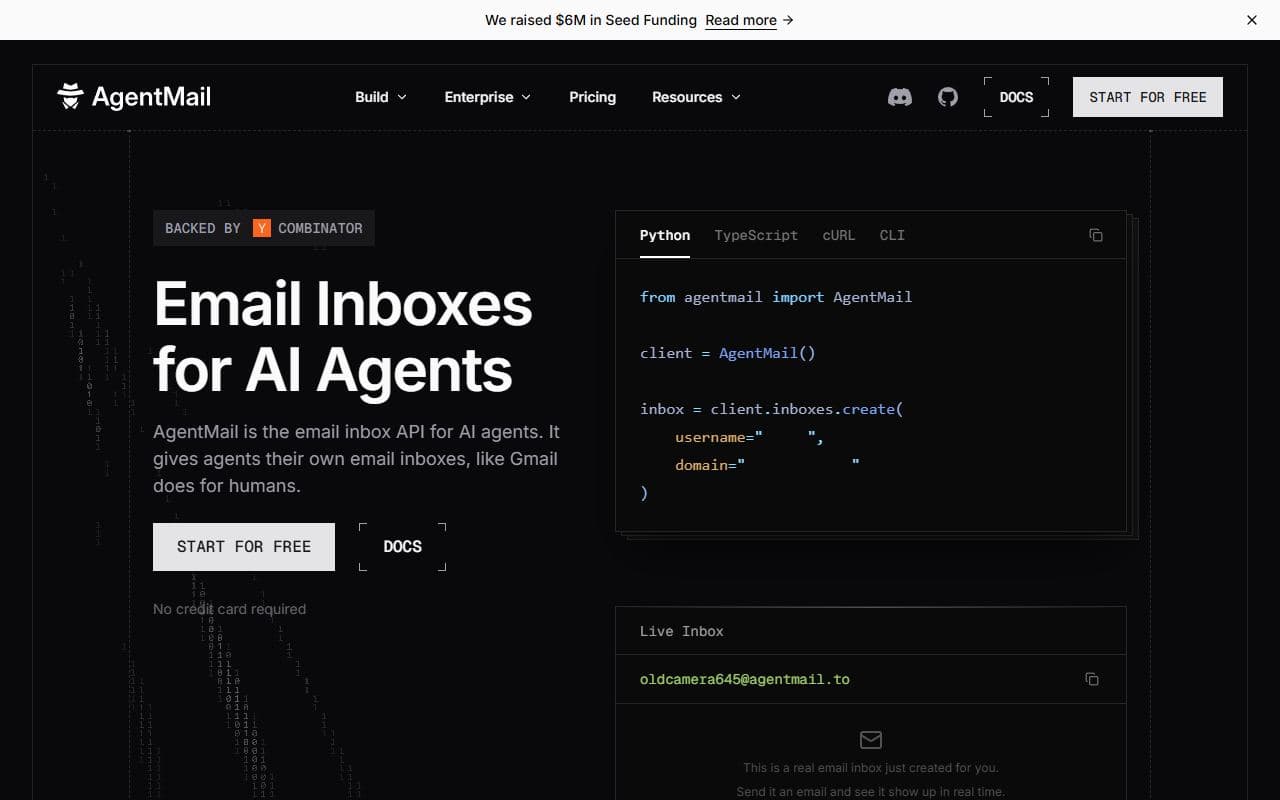
Programmatic inboxes and email delivery infrastructure built for autonomous AI agents.
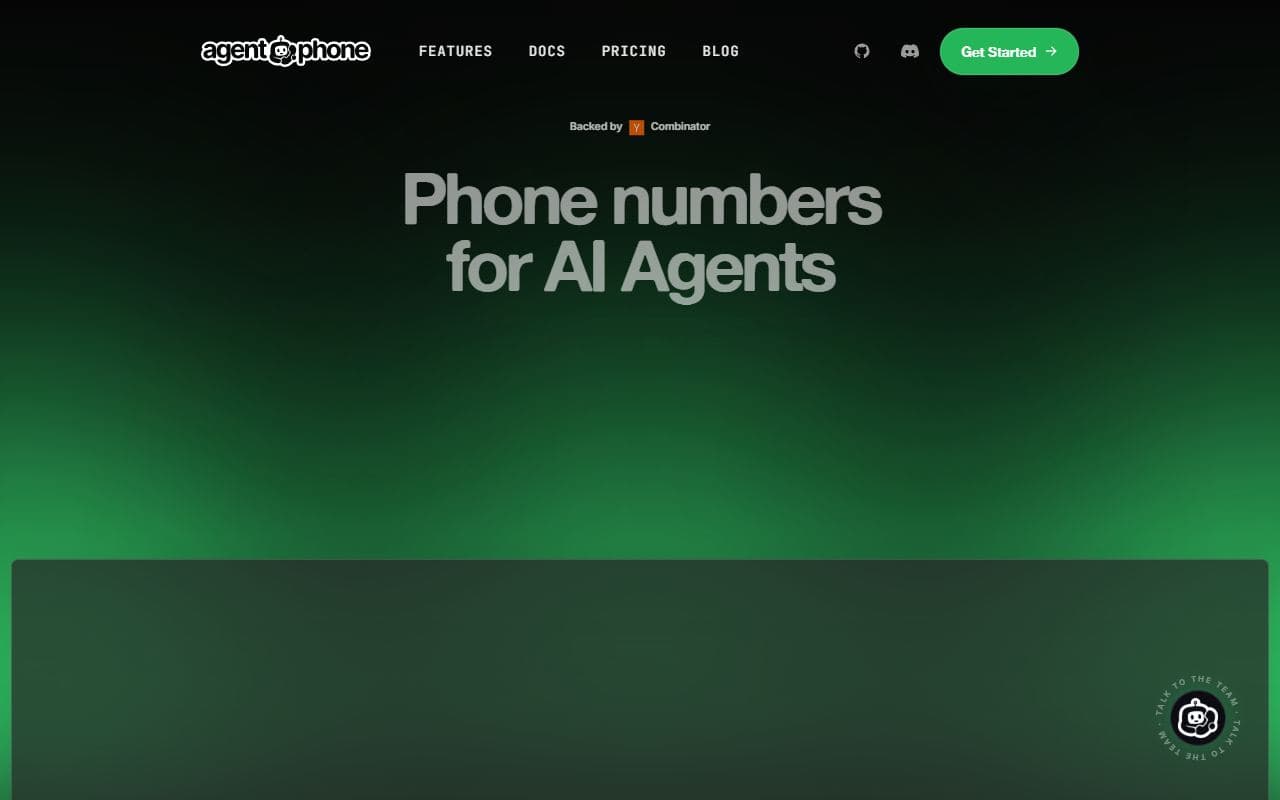
API-driven phone calling and telephony layer for autonomous AI agents.
Tool-calling platform that connects agents to thousands of enterprise tools with authorization and integration management.
Cloud browser infrastructure for AI agents that need persistent sessions, browser actions, replay, and production web automation.