
Is this your project? Give it 30 days of featured visibility.
Promote your projectBabyAGI
Open-source autonomous task management and agent experimentation project focused on task creation and execution loops.
Directory description / not source-linked
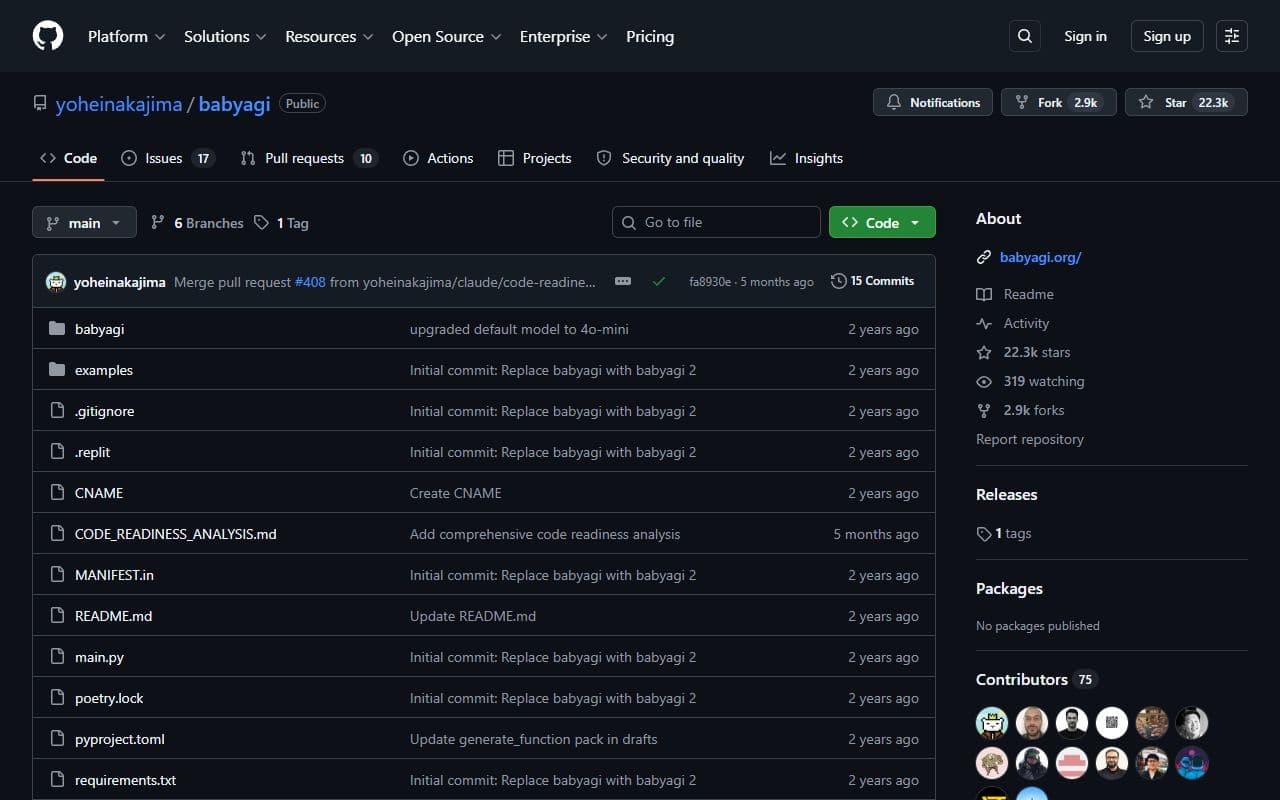
Additional AI-assisted overview
BabyAGI stands as a notable open-source project within the realm of AI agent development, primarily focused on enabling autonomous task management.
As an automation tool, it provides a structured environment for experimenting with AI agents, specifically designed around the principles of continuous task creation and execution loops. This architecture allows developers and researchers to explore the capabilities of autonomous systems that can define, prioritize, and complete objectives without constant human oversight, fostering innovation in AI workflow management. The project emphasizes a cycle where an AI agent can generate new tasks based on ongoing objectives, execute those tasks, and then iterate on the process. This foundational approach supports the development of agents capable of complex, multi-step operations in an automated fashion. Its open-source nature ensures accessibility and fosters community-driven innovation, allowing for broad adoption and adaptation across various experimental and practical applications within the automation domain. Positioned as a free-to-use resource, BabyAGI lowers the barrier to entry for individuals and teams interested in building, testing, and understanding autonomous AI agents. Its core functionality revolves around providing a robust framework for managing sequences of tasks, making it a valuable asset for anyone looking to delve into the practical implementation of autonomous AI systems and their operational dynamics. The project's commitment to task automation and agent experimentation makes it a versatile tool for both learning and practical application in the evolving field of artificial intelligence.
Unverified fallback. This legacy AI-assisted copy is not used as evidence for the structured facts or decision guidance on this page.
Capabilities
Source-backed claims are preferred. AI-assisted fallback items are labelled individually.
Open-source project for AI agent development
AI-assisted fallback / unverified
Facilitates autonomous task management
AI-assisted fallback / unverified
Supports experimentation with AI agents
AI-assisted fallback / unverified
Designed for task creation capabilities
AI-assisted fallback / unverified
Implements task execution loops
AI-assisted fallback / unverified
Focuses on automation processes
AI-assisted fallback / unverified
Provides a framework for iterative task processing
AI-assisted fallback / unverified
Use cases
Source-backed claims are preferred. AI-assisted fallback items are labelled individually.
Developing and testing autonomous AI agents
AI-assisted fallback / unverified
Experimenting with continuous task execution models
AI-assisted fallback / unverified
Building automated workflows for AI-driven tasks
AI-assisted fallback / unverified
Researching AI agent behavior in iterative task environments
AI-assisted fallback / unverified
Prototyping self-managing AI systems
AI-assisted fallback / unverified
How ClawSites assesses BabyAGI
No source-backed best-for or limitation claim is published yet. Unsupported conclusions are omitted until a checked source supports them.
Method: ClawSites keeps discovery copy separate from publishable claims, retains a source excerpt, and displays the date each cited source was checked. Pricing and availability can still change after that date.
Related to BabyAGI
Similar directory context, not an editorial claim that these products are interchangeable.
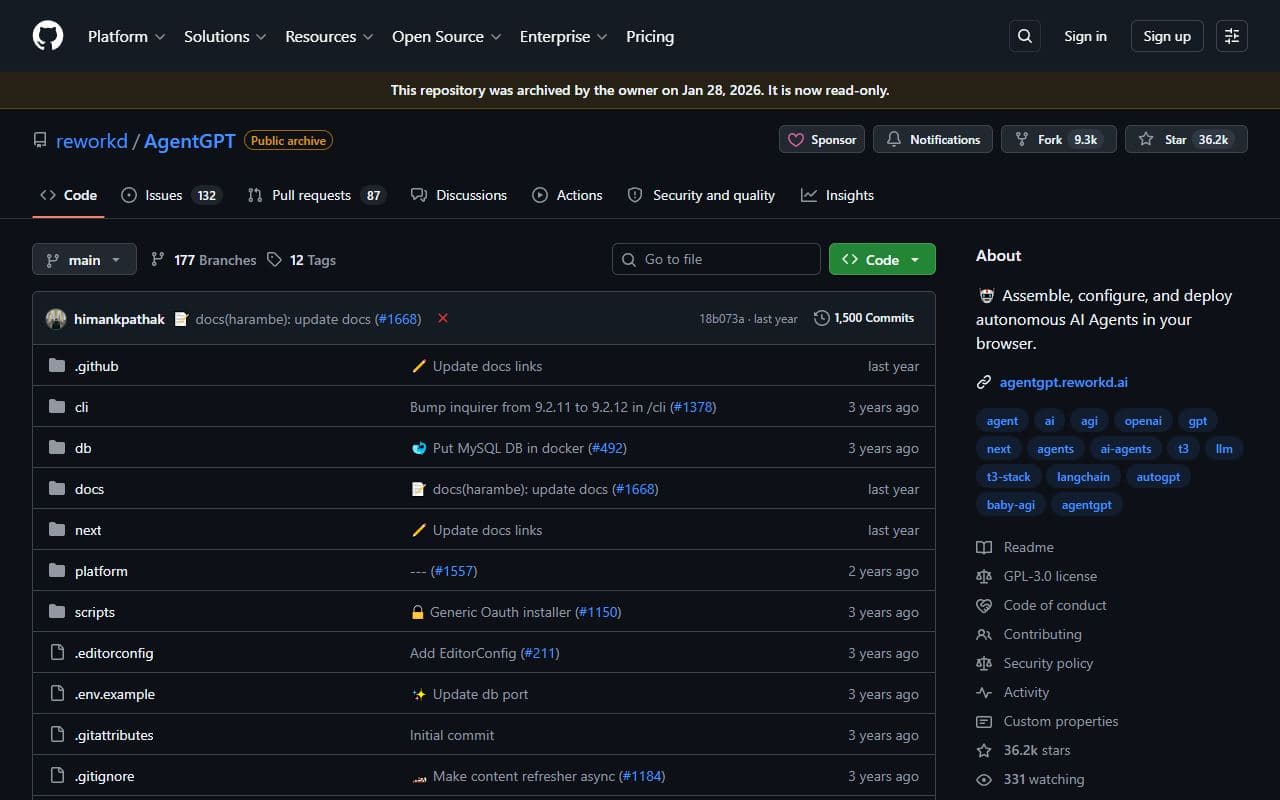
Archived open-source browser-based autonomous agent project for assembling, configuring, and deploying AI agents.
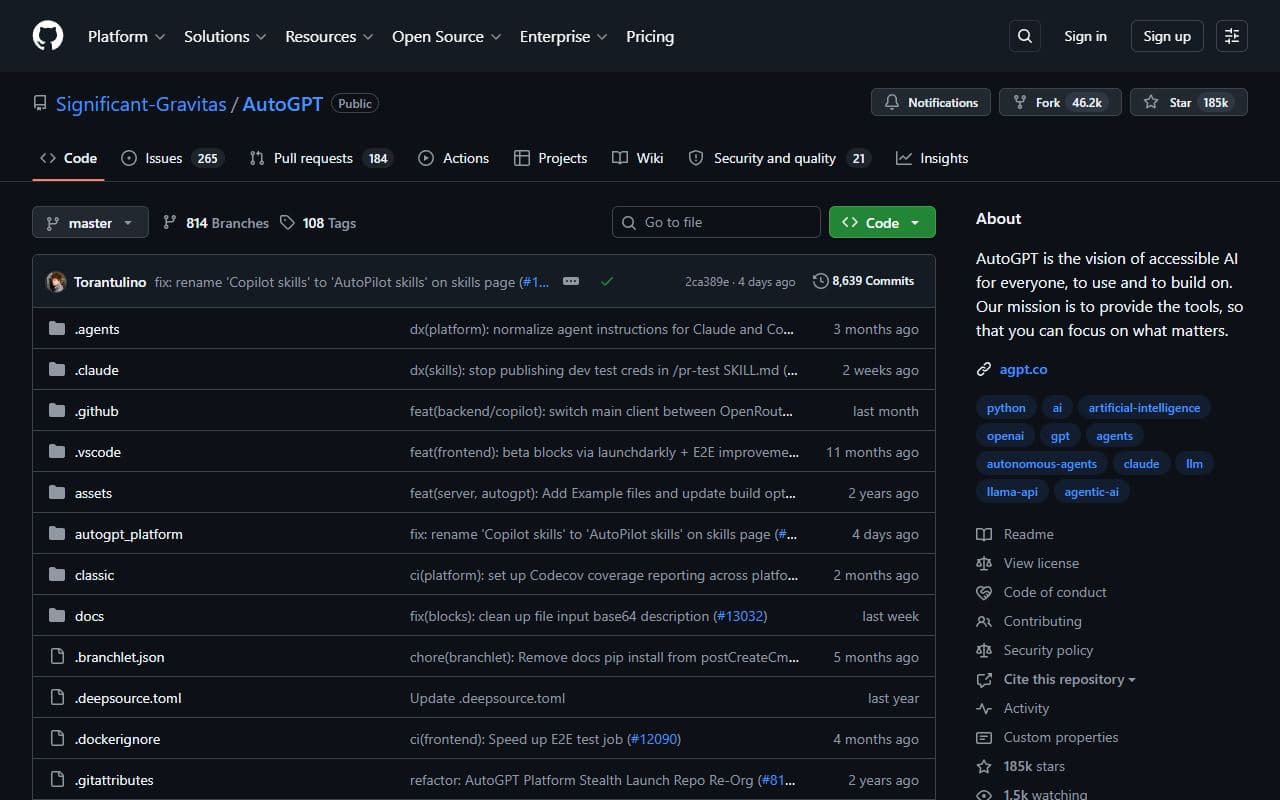
AutoGPT lets users build, deploy, and run AI agents that carry out complete workflows on demand, on schedules, or from triggers.
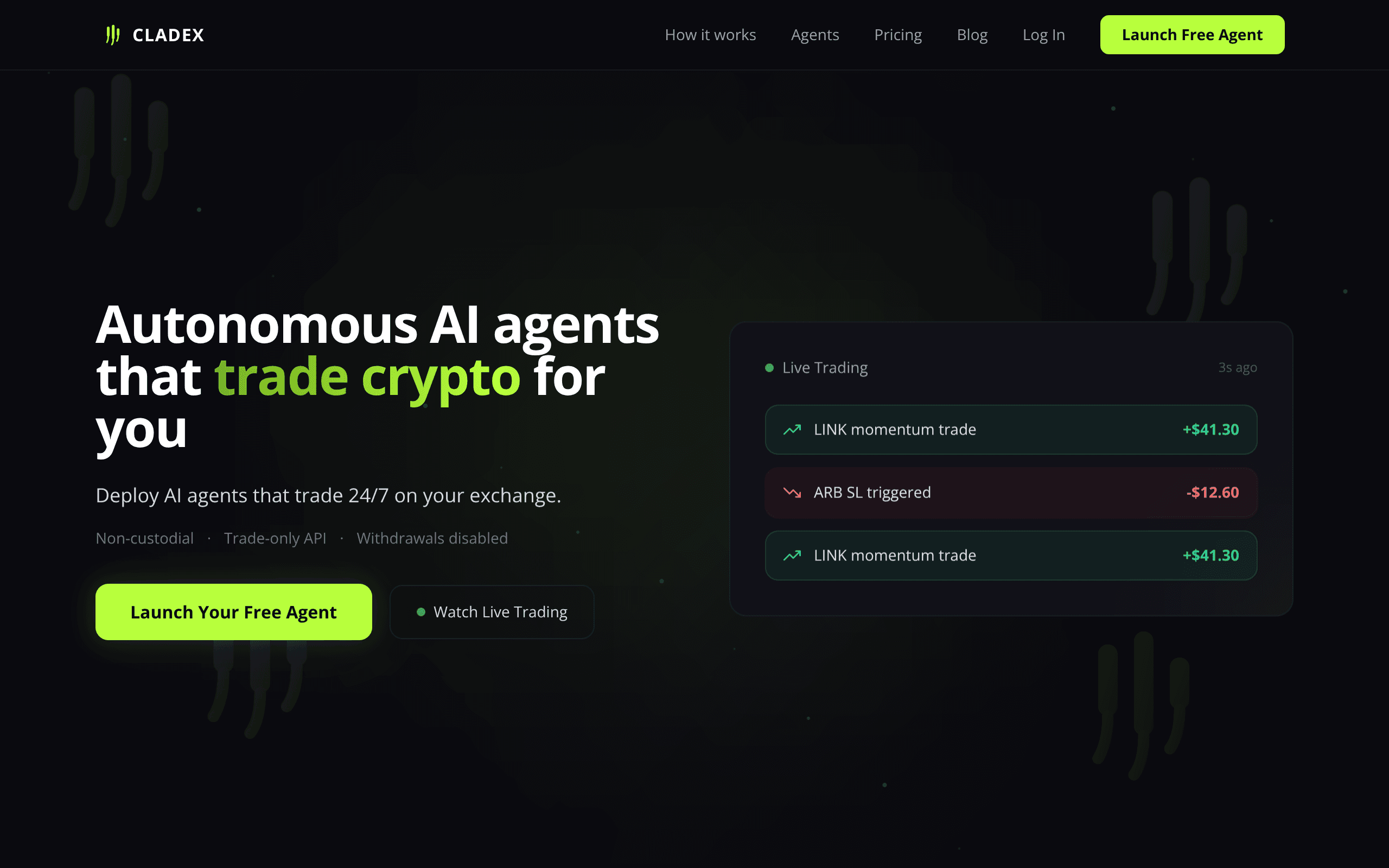
Cladex is an autonomous AI crypto-trading product that provides agents designed to trade cryptocurrency on a user?s behalf.
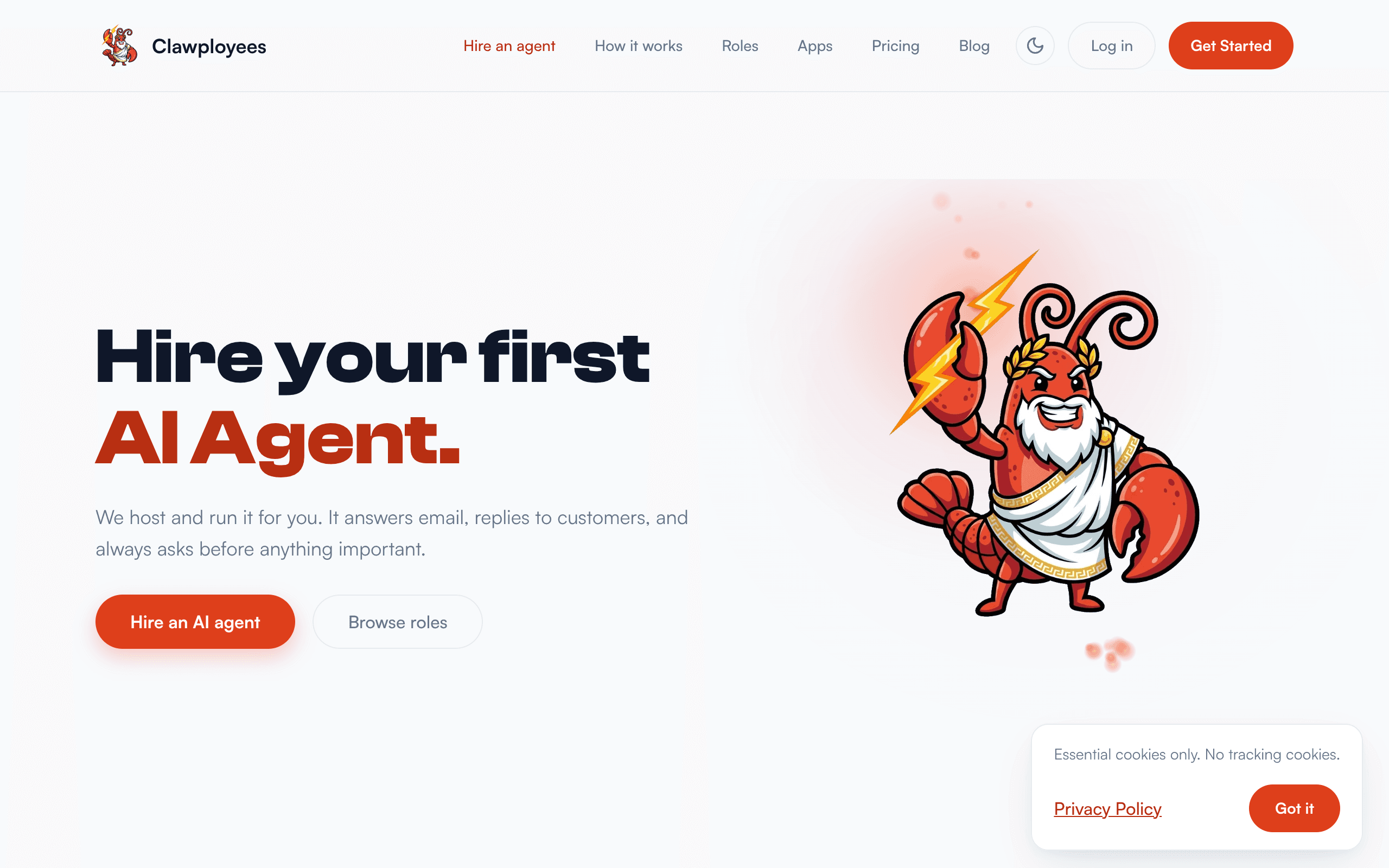
Hire ready-made AI agents for support, sales, email, and research. Connect Slack, email, WhatsApp, and Google Workspace; hosted for you.

Open-source autonomous agent platform from Nous Research with memory, skills, subagents, terminal tools, messaging gateways, and always-on workflows.
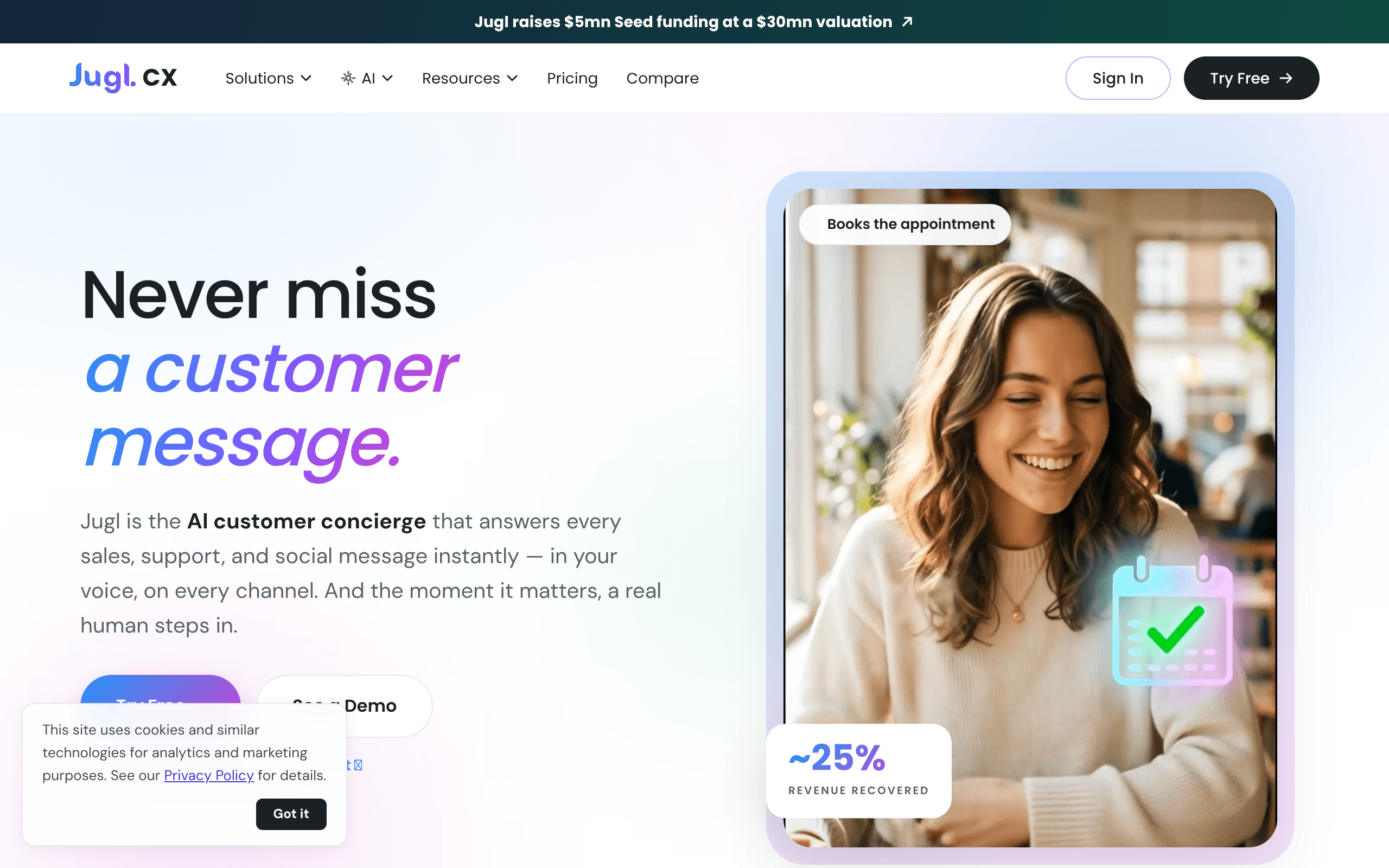
Jugl AI Agent is your 24/7 AI-powered sales and customer support assistant that helps businesses capture more leads, close more sales