
PulseMCP
AI-assisted overview of PulseMCP
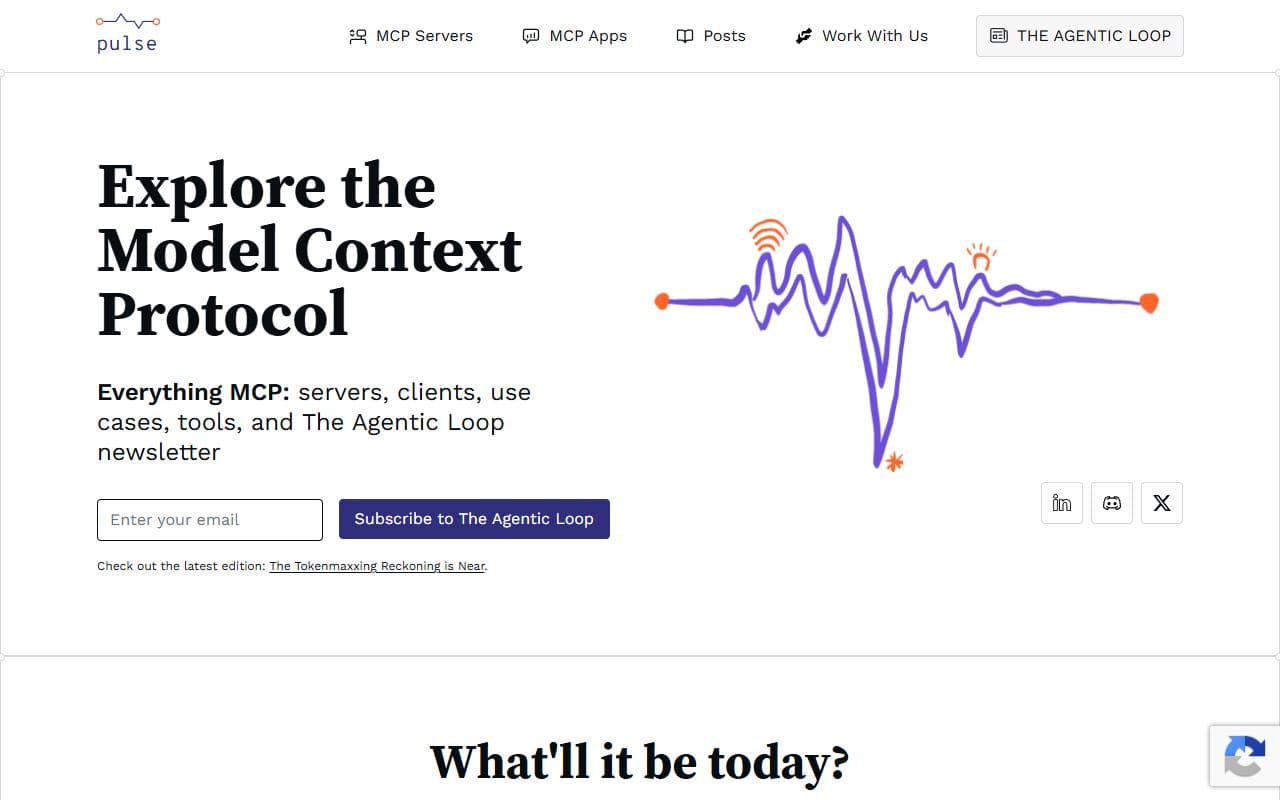
PulseMCP operates as a dedicated online platform, serving as a comprehensive directory and discovery site tailored for the Multi-Client Protocol (MCP) ecosystem.
Its primary function is to centralize information, enabling users to efficiently locate MCP servers, identify compatible clients, and access pertinent news updates. A key focus of the platform is to curate and list resources specific to the AI agent tool ecosystem, making it an invaluable hub for developers, researchers, and enthusiasts navigating the landscape of AI agent technologies built upon or interacting with MCP standards. This community-centric resource aims to streamline the process of finding and understanding various components crucial for engaging with MCP initiatives. By providing a structured repository, PulseMCP helps users uncover tools that support the development, deployment, and management of AI agents. Whether an individual is seeking a specific server instance, a client application for interaction, or the latest developments impacting the MCP space, the platform endeavors to offer a consolidated and easily navigable source of information, fostering greater adoption and collaboration within the ecosystem. PulseMCP reinforces its role as a foundational community resource by offering all its features and content free of charge. This commitment to accessibility ensures that a wide audience can benefit from its extensive listings and informational resources without financial barriers. The platform strategically positions itself as an essential node for discovery, information sharing, and community building, thereby supporting the ongoing growth and evolution of both the MCP framework and its associated AI agent tooling sectors.
This summary was generated from available directory data and may be incomplete. Verify current details on the official website before making a decision.
AI-assisted capability summary
- Centralized directory for MCP servers.
- Discovery platform for MCP clients.
- Curated repository of MCP-related news.
- Listings for AI agent tool ecosystem resources.
- Facilitates the exploration of MCP technology components.
- Offers a consolidated informational resource for the MCP community.
- Provides free access to its content and listings.
- Supports community-driven resource sharing for MCP initiatives.
Potential use cases
Developers seeking to discover new tools and resources for building or integrating AI agents within the MCP ecosystem.
Individuals or organizations looking for active MCP servers to connect with or clients to use for interaction.
Community members and enthusiasts desiring to stay informed about the latest news and developments in the MCP space.
Researchers and practitioners needing a centralized hub to explore the landscape of MCP technologies and associated tooling.
Project managers or system integrators identifying compatible MCP components for their AI agent projects.
/// EVALUATION NOTES
What to verify before using PulseMCP
ClawSites is the discovery layer, not the final approval. Use these checks to turn this listing into a small, evidence-based product test.
Workflow fit
Define the exact community job before comparing features. A good test has a clear input, output, and pass condition.
Access and permissions
Confirm whether the product needs a browser session, local runner, API key, inbox, repository, database, or payment access.
Human approval
Find the point where a person can inspect the result and stop an irreversible action such as sending, spending, deleting, or deploying.
Evidence after a run
Prefer logs, citations, screenshots, diffs, traces, or status history that let another person understand what happened.
| Directory category | Community |
|---|---|
| Pricing signal | Unknown |
| Recorded status | online |
| Structured context | 8 AI-assisted capability notes · 5 potential use cases · 8 AI-assisted discovery tags |
A practical three-step test
- 1Choose one reversible task. Write down the expected result before connecting sensitive systems.
- 2Limit access. Start with sample data, read-only permissions, or a test account.
- 3Save the evidence. Compare output quality, review effort, failure behavior, and time saved.